

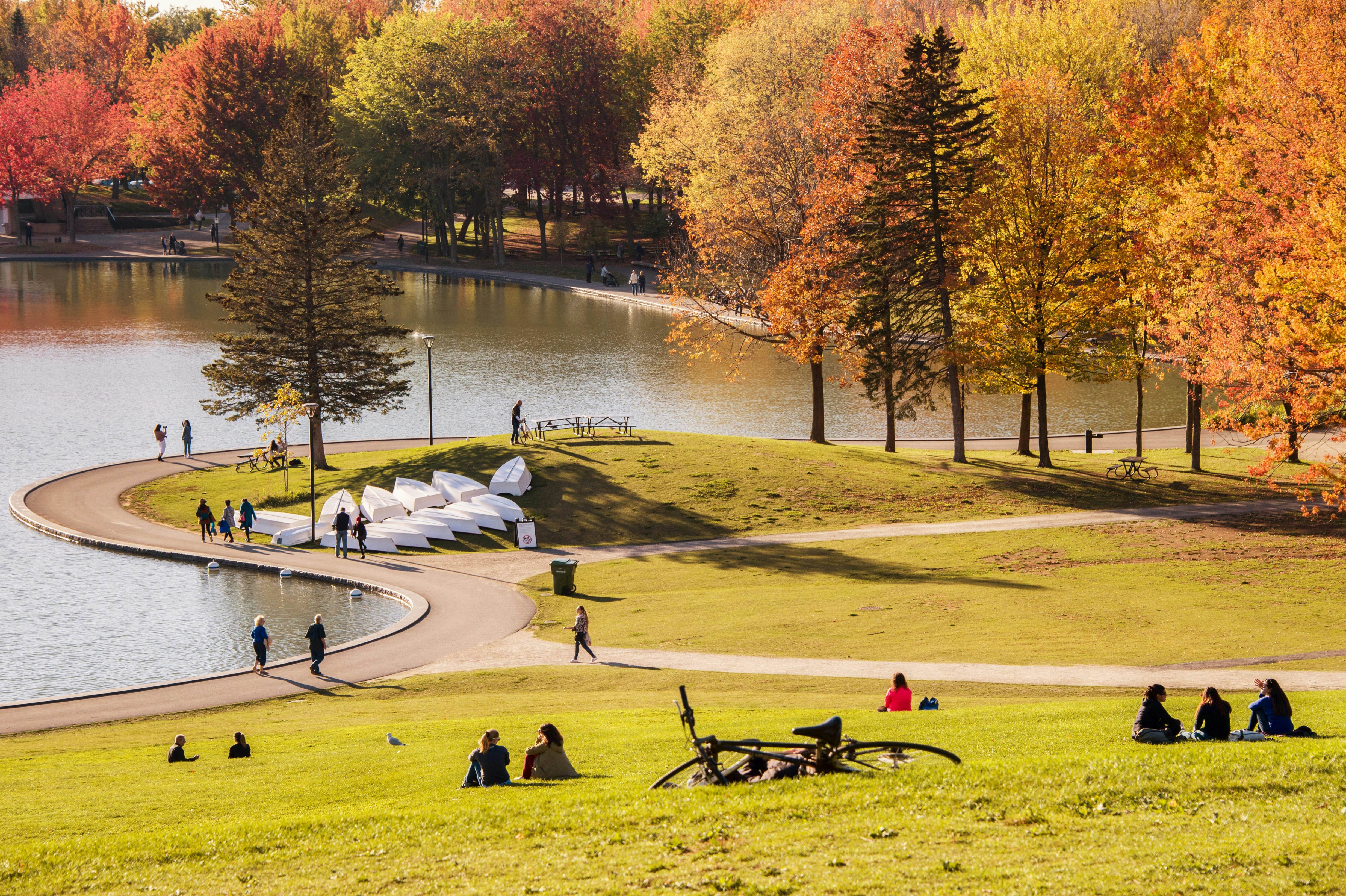
ontreal sits on an island in the St. Lawrence, crowned by a hill locals simply call "the mountain": Mount Royal, landscaped in 1876 by Frederick Law Olmsted, the architect behind Central Park. Founded in 1642 as Ville-Marie, it is now the largest French-speaking city in the Americas — though the city tells its story mostly in the back-and-forth.
Boulevard Saint-Laurent, "the Main," historically split the francophone east from the anglophone west, and it is along that seam that Montreal invented itself, fed by waves of Jewish, Italian, Greek, Portuguese, Haitian, Lebanese and Vietnamese immigration. You can taste the result at any hour: honey-boiled, wood-fired bagels in Mile End, hand-sliced smoked meat on the Main, poutine at three in the morning on the Plateau.
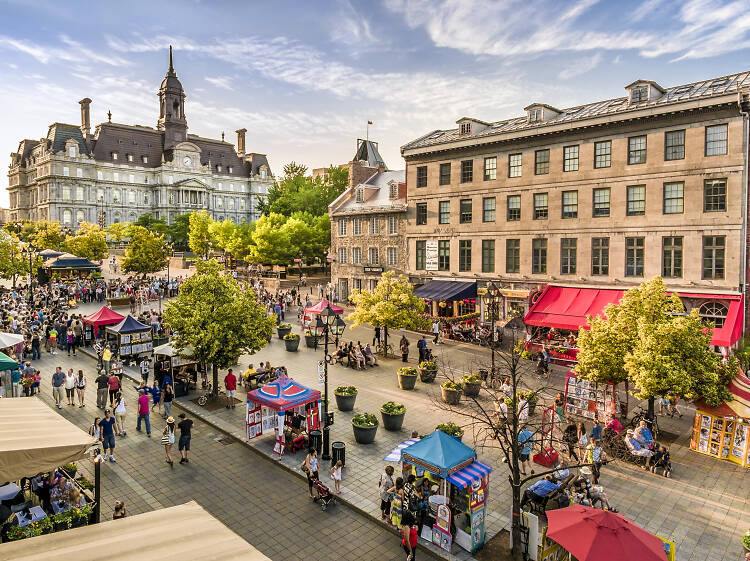
In summer, Montreal lives outdoors and out loud — the International Jazz Festival, Osheaga, terrasses spilling across the sidewalks, green alleyways. In winter, it heads underground into the RESO, the world's largest indoor pedestrian network, or pulls on a tuque and carries on as if nothing happened.
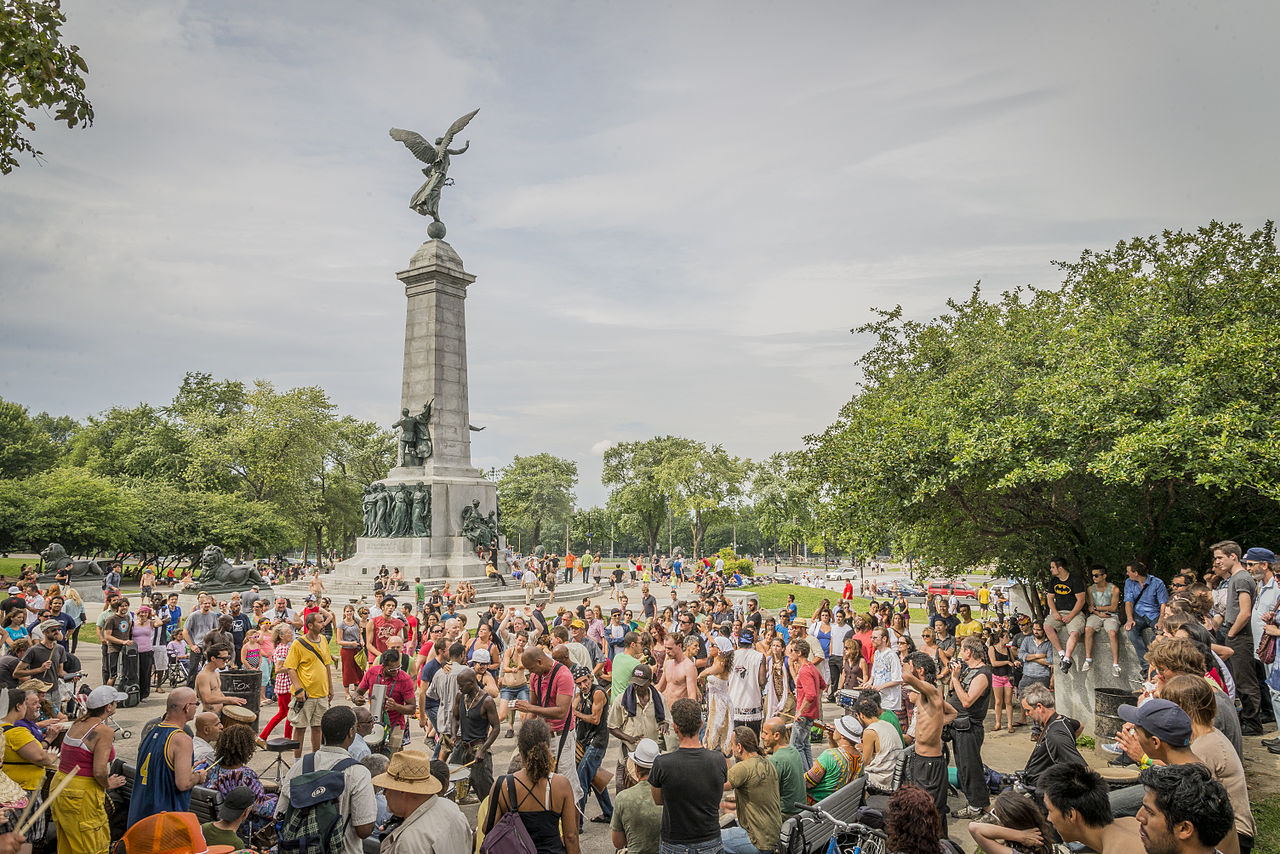
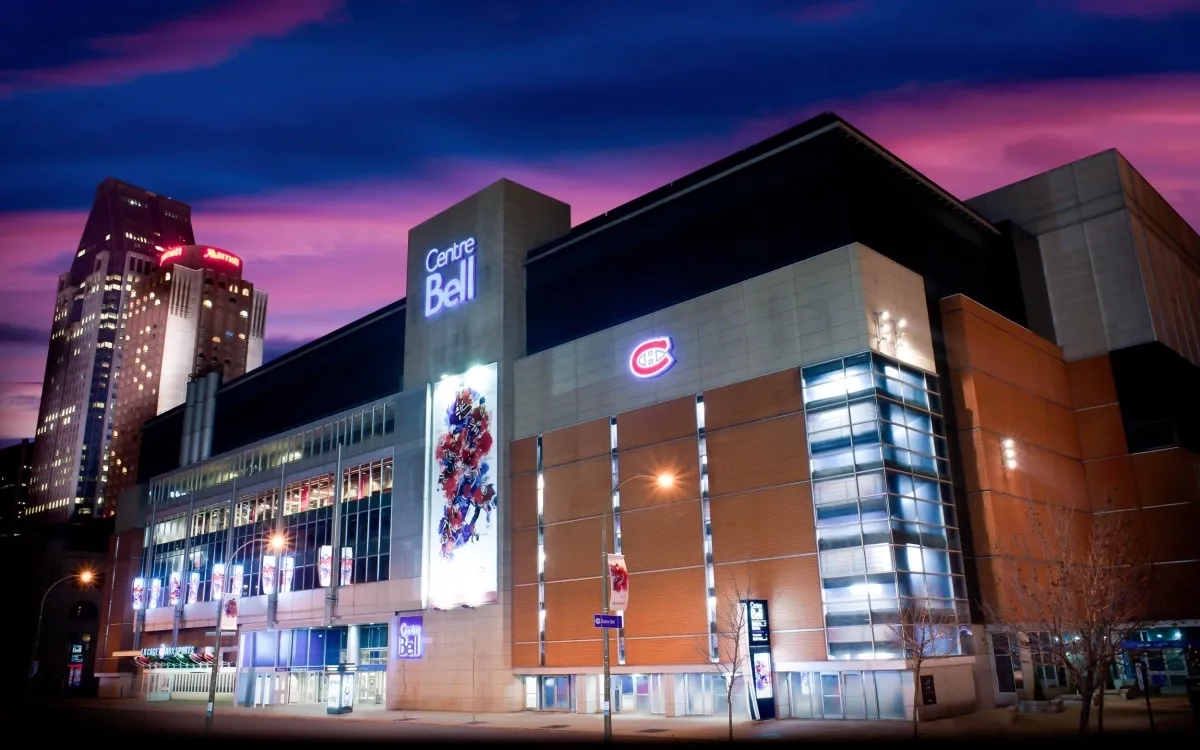
A city of four universities, birthplace of Cirque du Soleil and Leonard Cohen, a global hub for video games and artificial intelligence, it keeps mid-size-city rents alongside capital-city ambitions. Its rituals stand in for monuments: Sunday tam-tams at the foot of the mountain, Canadiens game nights at the Bell Centre, the first terrasse of the year as soon as the mercury climbs back above zero. You don't visit Montreal neighbourhood by neighbourhood — you learn it season by season.